
This past weekend I had the opportunity to attend the National PBIS Conference in Chicago with a team of school leaders from North Vancouver. PBIS stands for Positive Behavioural Interventions and Supports is an evidence-based framework used in schools to help improve student behaviour. It uses a data-driven, tiered approach to proactive interventions that help support a safe and inclusive school environment.
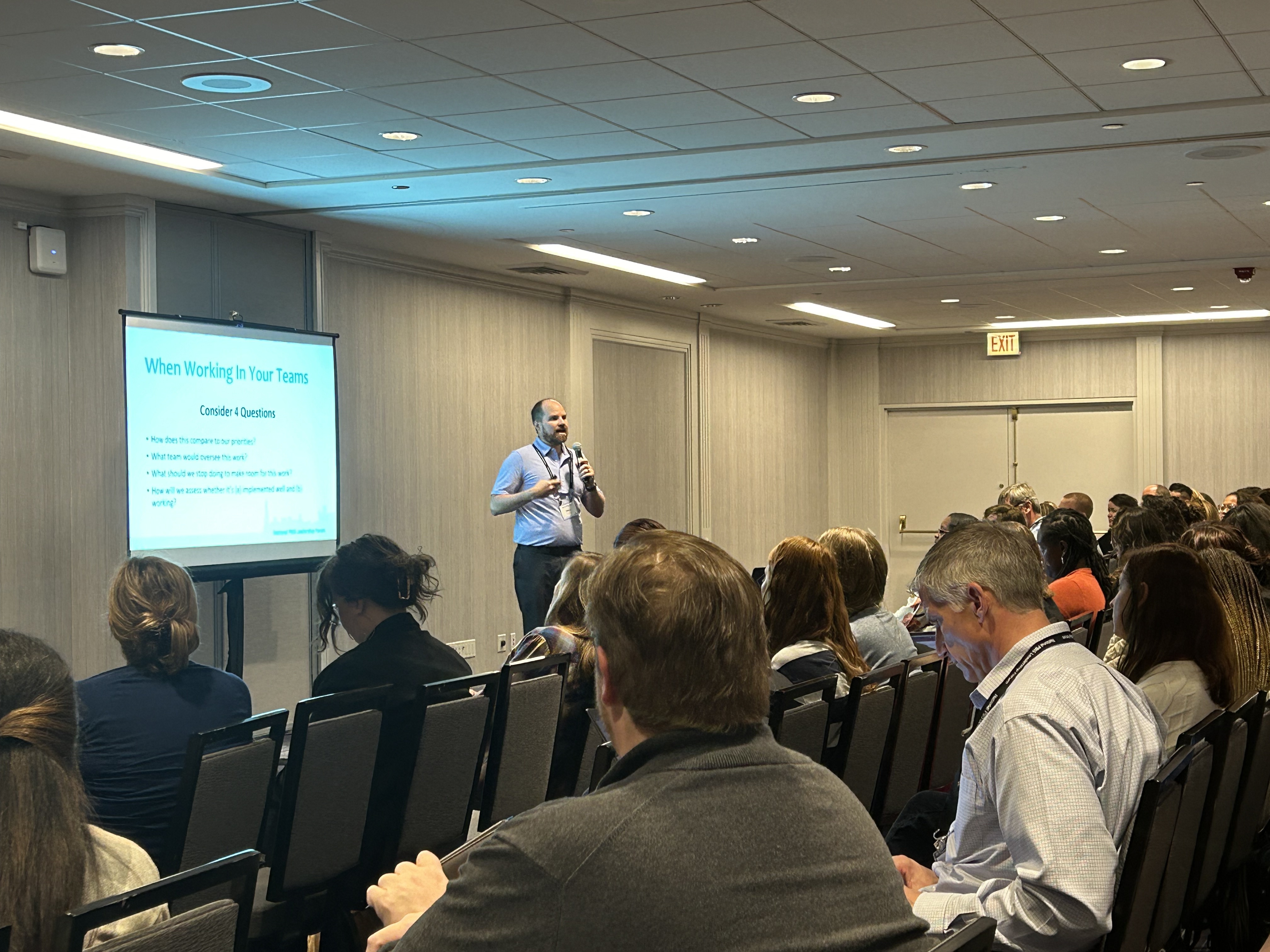
In additional to the typical keynote speakers, the conference had a wide variety of breakout sessions. These sessions were organized into themes, and the members of our group separated out to try and see as many of them as possible to be able to report back to each other on the varied learnings. The sessions that I attended were identified as part of the Equity Strand, and accordingly equity was a common theme between all the presentations.
Some of the titles of the sessions I attended included, ‘Using Data to Assess & Reduce Disproportionality in School Discipline’, ‘Culturally Responsive Practice to Support Each Learner’, and ‘Teaming to Increase Meaningful Participation of Students & Families’. A lot of what was discussed revolved around the disproportionate representation of black students in discipline and behavioural data, and the systems and structures in school that perpetuated inequities for non-white students. I found myself constantly having to calibrate what I was hearing for my context in Vancouver, and to consciously work to include a broader definition in my mental application of what I was hearing to encompass a greater number of misrepresented student demographics. While our proportion of black and Latin students is far fewer than the US, they are still represented in our schools along with students of Indigenous ancestry, Asian, South Asian, etc. It was interesting to hear the extent to which school leaders in the US were able to disaggregate student data on ethnicity in ways that we cannot. For example, they could see what proportion of black students had been sent to the office, versus white students. We don’t collect data on ethnicity like that in B.C. But not collecting the data certainly doesn’t mean there aren’t equity problems in our Canadian schools.
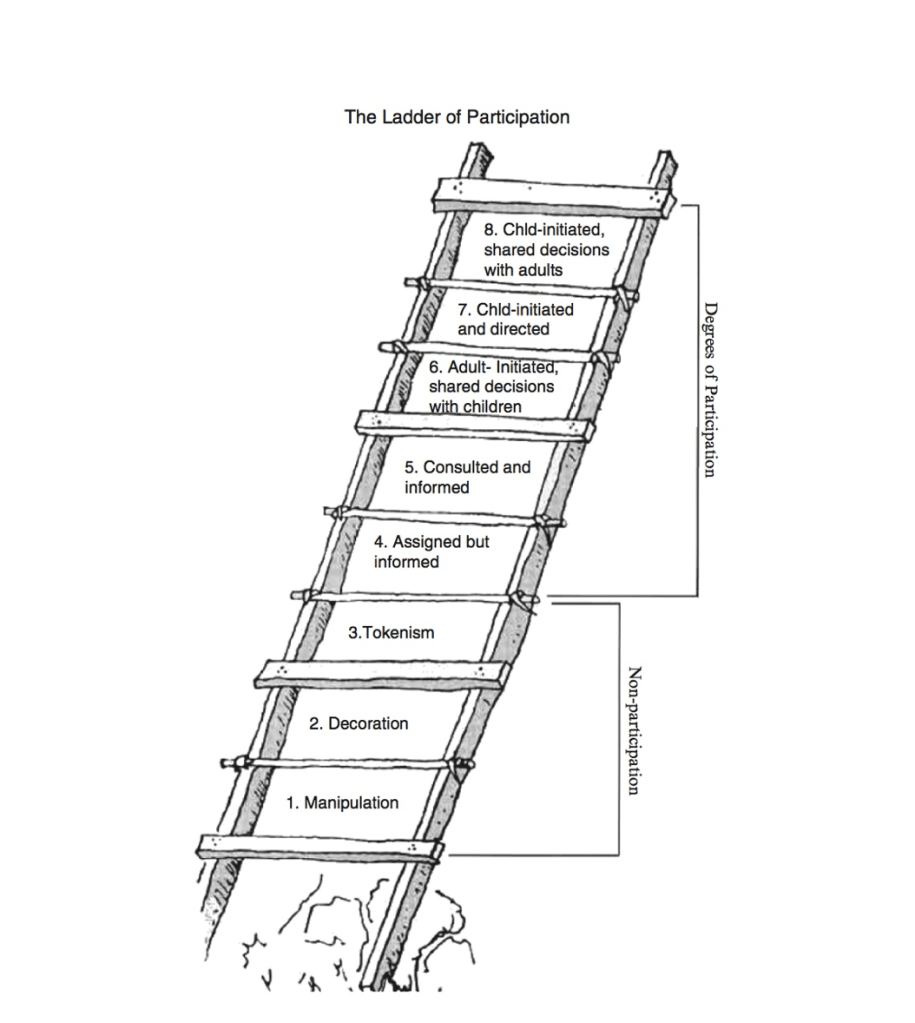
One of the focuses of PBIS I really appreciated was its heavy emphasis on data-driven decision making. One of the key reflective questions was, “are your interventions evidence based?” It helped me reflect on what evidence we are actually using. In North Vancouver schools we’re able to pull data from our YDI and MDI surveys, as well other more informal and anecdotal evidence that is no less valuable. All the different forms of student voice are also evidence that contribute to the rich tapestry of data. It’s important to consider the many different ways we can meaningfully engage student voice. One of the diagrams I appreciated most from the weekend was titled, ‘The Ladder of Participation’, which illustrated the degrees to which student voice is authentically incorporated. At one end of the spectrum, are students simply standing next to you for photo ops, or are they being leaders and initiators in decision making at your school? What opportunities are they given to do this?
Sometimes stepping out of your context to see how things are done in other places makes you appreciate the good things you’re already doing. There was some really nice alignment between the systems, structures and language used in PBIS, and things we do in North Van. The multi-tiered systems of support model where interventions are separated into 3 levels was akin to the ‘universal’, ‘targeted’ and ‘intensive’ models of support in North Van. One easy example of this is our Choices Program, that supports students’ social-emotional wellness. At Sutherland it was nice to recognize that our school-wide intervention of no cell phones during class time was a perfect example of a PBIS intervention in a high school setting. PBIS is often seen more commonly as an elementary framework, but there are certainly great examples, such as Choices and cell phone interventions, that exemplify elements of it being used successfully in secondary settings as well.
One of the more controversial aspects of PBIS was its use, in some instances, of rewards. These could be something as simple as a sticker, or an extended or second recess break for students who accrue enough points through whatever tracking system the school or classes use – potentially like this one. Some critics would say that motivation to change behaviour should be intrinsic, and not motivated by external or material forces. Defenders will tell you that rewards, like all elements of PBIS, are supported by data and that using them statistically helps to improve student behaviour. And that there’s room, particularly with younger students, to have what starts as an external motivation in early grades, to migrate to more intrinsic as they grow. I would count myself more in the skeptic’s camp when it comes to rewards, especially in terms of what values we’re trying to instill in students. Do we want them doing the right thing because there’s a prize, or because it aligns with the morals we aspire for students to develop?
As school leaders we need to keep in mind that all behaviour is communication. Many students may not be able to articulate the challenges they are facing, and their way of asking for assistance may be to act in ways that demand our attention. Maintaining a culture of expectations for students that aligns with an established co-created code of conduct is important, but traditional discipline may not always the best response. We need to listen to the needs of our students and families to know how best to support and encourage positive behaviour.
Lastly, the conference was a great opportunity, of course, to energetically connect with colleagues on a fun experience. We worked hard, collectively reflected, and took time to enjoy the good company of friends by doing group activities like a Bulls basketball game, team dinners and a Chicago River cruise. It was an exceptionally valuable experience I was grateful to be a part of!


 Education Rumination