With the recent introduction of BC’s Numeracy Assessment, and the upcoming release of the Literacy Assessments, there’s been renewed attention given to the Proficiency Scale used to assess student performance. Occasionally I get some confused questions about the differences and similarities between Performance Scale and Proficiency Scale, so I thought it worth providing some clarity.
What is Performance Scale?
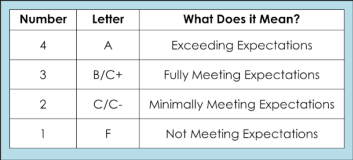
Performance Scale, or Performance Standards, focuses on assessment of student performance where students are asked to apply the concepts and skills they have acquired to complete complex tasks. This type of assessment supports criterion-referenced evaluation by enabling the comparison of student performance to established standards. The BC Performance Standards have established the following four levels of student performance. They are:
At Handsworth, you’ve likely seen Performance Standards on your son or daughter’s report card in Grade 8 or 9 perhaps in their Careers course, their ADST rotation, band class, or even Science. The graphic below shows an approximate comparison between each of the standards, but I think this can be misleading. As I’ll discuss below, the purpose of using Performance Standards is really to get away from letter grades, so tables like this that draw a direct line from one to the other are really counterproductive.
In North Vancouver, we’ve also been experimenting with our Student Information System, MyED’s, capability to run a ‘Standards Based Gradebook” where we can identify the curricular competencies we hope students are developing and evaluate their relative mastery in each of them using the Performance Standards.
What is Proficiency Scale?
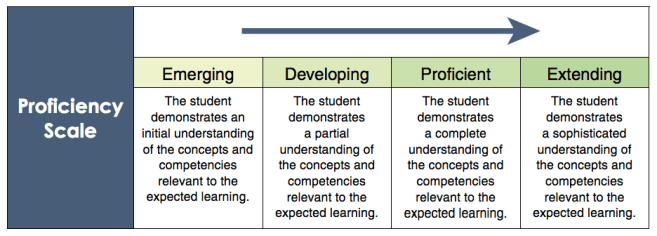
While it is not new, a sound understanding of Proficiency Scale grading moving forward is vitally important in BC, as the latest Student Reporting Policies from the Ministry of Education outline that this will be integral for reporting student progress. Similar to Performance Standards, Proficiency Scale divides student demonstration of understanding into 4 categories. They are defined as:
Emerging
Developing
Proficient
Extending
Elementary Students who complete the Foundation Skills Assessment’s in grades 4 and 7 have their work assessed using Proficiency Scale. Secondary students across the province will see their Numeracy Assessments, and soon their Literacy Assessments, also graded using Proficiency Scale.
Why don’t we just use percentages or letter grades for all assessment?
While percentages and letter grades continue to be used for classes at the senior grades, there is now an established shift in K-9 assessment practices as standards based grading better support the aims of B.C.’s new curriculum. This emphasis on criterion based assessment is really part of a broader moved shifting the emphasis of education in BC to a culture of learning over a culture of grading. Encouraging student’s curiosity for its intrinsic value, rather than simply to ‘get an A’ is the ultimate hope. Moreover, the introduction of BC’s new curriculum makes this realignment of assessment practices a necessity, and is well-grounded in research. For those interested in reading more about how educational assessment has evolved, I encourage you to read up on Bloom’s Taxonomy VS Webb’s Depth of Knowledge (DoK) to see how new assessment practices are aligned with the DoK model.
This month I had the privilege of attending the BCPVPA Short Course I, held at UBC from July 3 – 7. This week-long intensive course is designed to provide new and early-career school leaders with the opportunity to refine their leadership skills and connect and network with other like-minded professionals at similar stages in their profession. I’m sometimes asked by budding school leaders, or those who are in the role, but never took the opportunity what Short Course I is all about. So here it is.
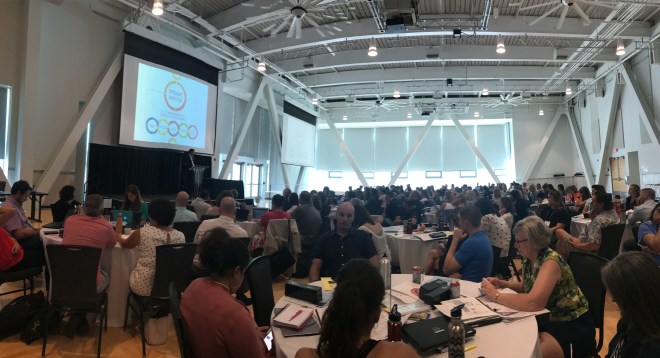
For the 41st edition of Short Course I, we had assembled the largest group educational leaders ever to attend this program. This year’s theme was “Leading Learning: Thriving in a Time of Innovation and Change”. Each day, the course focused on a different domain from the Leadership Standards for Principals & Vice-Principals in British Columbia. In the following I break down just some of the highlights of what was covered each day.
Short Course Day 1
Day 1 revolved around Moral Stewardship.
Sweet 16!
830AM We met in our pre-determined ‘family’ groups, each chaired by a veteran facilitator who had been to Short Course before. I was at table 16 and my facilitator, Anne Smith, was a Principal from Ecole Lac des Bois in Prince George. Anne had already played this role a number of time previously and I could tell from her enthusiasm and confidence that she was going to be a wonderful facilitator! Our team had to come up with a team name, and I whimsically suggested “Sweet 16” because Anne had brought a bunch of candy for our table, and it stuck. Team Sweet 16 was formed!
915AM After some table talk, we were given a formal welcome to UBC by Blye Frank, the Dean of Education. Mr. Frank reminded us that when doing traditional acknowledgements at our schools, that we are not in a position to welcome our staff and students to traditional territories, that was are only permitted to acknowledge where we work, play and live. An important distinction, to be sure.
Our Co-Directors for the conference, Liz Bell and Jessica Antosz, as well as Kim Maxwell, the BCPVPA Professional Learning Senior Assistant, were introduced. I was fortunate to already know Liz from her great work previously in the North Vancouver School District. They set us up with what the structure would be for the week, and discussed some of what we’d need to know – everything from the philosophy and vision of the short course to tech access and where our break out rooms would be located.
945AM The Superintendent of Schools in Vancouver, Suzanne Hoffman, spoke to us about Passion For Leadership. A few highlights I took from this talk revolved around modeling leadership – ‘show, don’t tell’, and to lead humbly which is something I try to emulate in servant leadership. One of her most quotable questions was about, “what is your flagship?”, meaning what is the one thing you’re known for around your school community. She gave the group a moment to reflect when asking if we could name off all of our students who are in care, or who are indigenous. And finally she reminded me of a book I’ve meaning to read – Carol Dwecks, “Mindset: The New Psychology of Success”, where she discusses having a ‘growth mindset’.
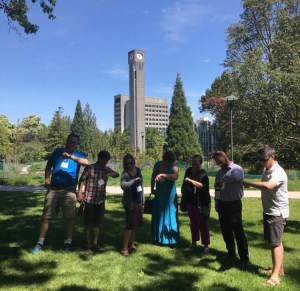
11:20AM Our family groups engaged in a team building exercise called a ‘Goose Chase’. This was essentially a scavenger hunt around UBC where we had to take photos of our group doing funny poses in different areas after figuring out clues. Teams were finishing the challenges so quickly, that more had to be added while we were playing. Our team ended up finishing 3rd out of 25 teams! It was fun to see the other team’s photos posted on the activity feed in the app throughout. I’m contemplating doing it with our staff around Handsworth during the first week back in September.
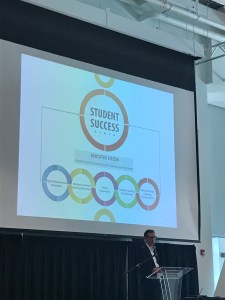
Completing a Goose Chase challengeScott MacDonald speaks about student success
12:00PM Lunch each day was provided by UBC catering and was outstanding!
12:45PM BC’s Assistant Deputy Minister of Education, Scott Macdonald, spoke with us about data driven decision making in BC’s education system. He highlighted that high performing schools have high performing administrators, but also recognized that energies are not limitless and when we’re considering where to apply them to think about some measurables like graduation rates. He also had some interesting statistical comments about students who are December babies, versus students who are January babies and what some strategies might be to mitigate the differences between birth months in the same grade.
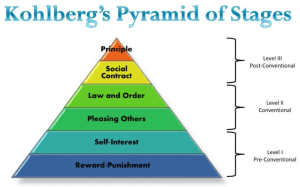
1:30PM Liz Bell and Kevin Fadum facilitated a session on ‘Decision Making’, giving us a process by which we could reflect on how we make our decisions, and what values those decisions are grounded in. Kohlberg’s pyramid of stages was referenced in discussion what motivates people, particularly when interests are competing. We discussed values, morals and ethics and look at analyzing ‘Right VS Right’ dilemmas where clear-cut answers were not always obvious.
3:45PM Our afternoons were spent each day unpacking with our family groups reflections from the day. Around 4:30 we broke for the day, save for the large number of folks who stuck around for the evening Ignite session in the UBC Nest patio.
Speaking at the Ignite event
5:00PM In the evening, New Westminster Principal John Tyler organized an Ignite session. Ignite talks are similar to Ted Talks in that they are structured talks delivered by presenters with accompanying visuals. An Ignite, specifically, is exactly 5 minutes long consisting of 20 slides timed to run at 15 second each. I was one of 5 presenters to speak during the Ignite session, talking about my first year as a Vice Principal. Much of the content of what I spoke about was taken from my blog entry, ‘My First 100 Days’. A big thanks to my colleagues from North Van, Jeeniece, Jillian and Brigette, who were also at Short Course and stayed to support me.
Day 2’s theme was Instructional Leadership
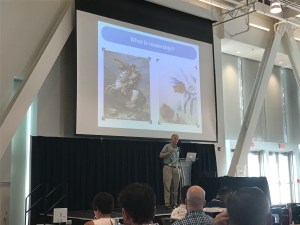
Bruce Beairsto discusses leadership
9:00 Our first speaker of the day was the former Superintendent of Richmond Schools, Bruce Beairsto. His topic, broadly, was instructional leadership, but specifically how do we lead learning. His use of the male / female archetype when discussing leadership styles and the accompanying images of Napoleon and Mother Theresa gave the group pause for thought and fodder for discussion later in the day. Mr. Beairsto compared influence versus authority, commitment versus compliance and inspiration versus instruction when discussing influential leadership against management authority. He also defined professional autonomy for us, emphasizing what ‘professional’ really means – a voluntary adherence to a high ethical standard of expectations.
11:00 – 12:30 / 1:30 – 3:00 The majority of our day today was dominated by two different breakout sessions. Each session focused on a different aspect of Instructional Leadership. The intent was to have a different member from each family grouping attending a different session so that all would be covered and the learnings could be reported back to the group for mutual benefit. The only drawback to this was that I found myself in the same sessions as some of my North Vancouver colleagues, and we had intended on similarly distributing our time across the sessions for mutual benefit, but it didn’t end up working that way due to our family group obligations. We also didn’t get the chance to support our North Van colleague, Rob Smyth, at his session on Understanding the Why: Leading and Learning in Aboriginal Education.
The first session I attended in the morning was called Working in a Unionized Work Place and was led by Kevin Fadum, and Debbie Craig. After all the attendees introduced themselves and their work context, Kevin and Debbie walked us through understanding collective agreements – both provincial and local language. We talked about management rights and responsibilities. Unfortunately we ran out of time before getting through all the content that was prepared for us, but what we did cover was extremely informative.
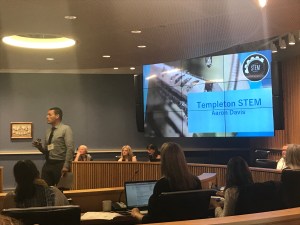
Aaron Davis speaks about Templeton STEM
The second session I attended in the afternoon was in the Kingsmill Forum, a fancy round seminar room that looked sort of like a city hall chamber. Here I listened to a panel of speakers talk about Leading the Redesigned Curriculum. After an overview discussion about how to effectively lead change, we delved deep into 4 different examples – 2 from elementary and 2 from secondary – of school leaders examples of employing new curriculum. The secondary examples, which were most relevant to me were 1) Aaron Davis, VSB Director of Instruction, speaking about Templeton’s STEM Program, and 2) Pedro Da Silva, also a VSB Director of Instruction, sharing the certificate program used at John Oliver Secondary. During this session I also had a great chat with one of my family group members, Mike Moloney, VP at Panorama Ridge Secondary, about using of course outlines as one way to gauge successful implementation of new curriculum. If teachers are successfully using the new curriculum, it should be evident in what they’re assessing, which would ideally also be described in their outlines.
Day 3 was all about Relational Leadership.
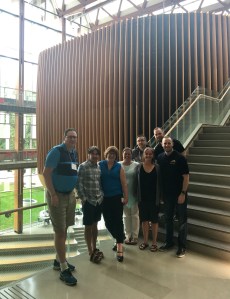
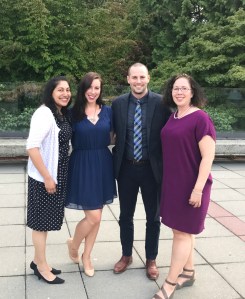
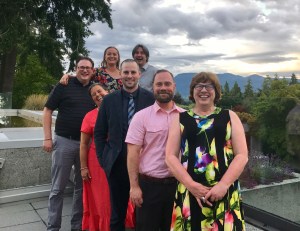
My fellow North Van Short Coursers!
We began the day with a unique welcome from a Tibetan horn. One of the major pieces of today was all about First People’s perspectives – ways of knowing and learning. We were welcomed by Elder Roberta Price of the Coast Salish People, who shared some personal stories with us.
9:00 – 10:30 Our first session on Aboriginal Education was titled Understanding the Why: Leading and Learning in Aboriginal Education and was led by Brandon Curr, District Principal for Indigenous Education in Burnaby, and our own Rob Smyth, Norgate Elementary Principal, from North Vancouver. The speakers encouraged us, especially, to make sure we were connecting with our local aboriginal groups to ensure their voices were being heard. To describe our fluency, appreciation and use of First People’s principles in education, a metaphor of piloting a canoe was used. Some of us are just at the stage where we are carrying the canoe to water, while others are fully immersed, piloting in deep waters. Three questions that help guide our discussion included: 1. What are your experiences with aboriginal worldviews and experiences? 2. What reservations or doubts do you have about journeying into deeper waters with aboriginal worldviews and perspectives? 3. What commitment can you make to journey into deeper water with aboriginal worldviews and perspectives? During this session, there was also mention made of a North Van canoe and kayak tour operator named Takaya Tours. I know other schools in our district, as well as our school board, have taken staff on such an experience, and it occurred to me that this might be a great idea for our staff some time in the next year.
Calls to Action Panel Discussion
11:00 – 12:30 After break, Terry Beaudry, Deputy Superintendent of Schools in the Central Okanagan, facilitated a panel discussion on Our Calls to Action – Truth and Reconciliation. I really liked Rob Smyth’s open question, asking us to look beyond our professional work and to contemplate what is our personal call to action when it comes to reconciliation. As I’ve been working on our school plan the last couple of years, I was reflecting during this discussion about ways I could more meaningfully incorporate aboriginal perspectives into the plan. We’re also in the midst of planning a rebuild of Handsworth, and I like the idea that signage, such as bathrooms, could be posted in local aboriginal language. Our school theme for next year is going to be “Building Connections” and everything I heard during the panel discussion certainly spoke to that theme. The best quote to summarize the discussion would probably be, “Watch, listen, & show respect.”
1:15 – 2:45 In the afternoon, Maeve Buckley, a retired principal and leadership coach from the Central Okanagan, ran a session on leadership with us. She kicked off her session with an energic round of group sing to the song RESPECT, and carried this theme through her presentation as she used the same word, respect, as an acronym for leadership elements. We looked at different types of leadership styles, and watched an interesting clip on ‘Presence & The Drama Triangle’.
Maeve commented on the importance of self-awareness and self-reflection as a factor that predicates success as a leader, and it gave me a heightened appreciation for the reflective blogging I do! She also reminded us to speak positively, and that the absence of negative talk is only neutral, not positive. The main activity we participated in was a 4 corners activity where we were asked to consider which type of boat represented how was navigated change – a speed boat, sail boat, kayak or cruise ship. As we went around the room justifying our choices, there were some very interesting rationale; everything from how easy or difficult altering course was, to how many people could be brought along successfully with the change, or to what motivate or powered the boat’s change in direction. The boat was certainly an apt metaphor!
Enjoying refreshments at Cecil Green House
We wrapped the formal portion of the day a debrief with our family groups and facilitator before heading home or to our hotel to prep for the evening social. Today’s social was a wine and cheese event sponsored by the BCPVPA legal team and hosted by UBC / BCPVPA staff at Cecil Green House.
Day 4’s theme was Organizational Leadership and we began the day organized a little differently – this time in our ‘affinity groups’. These groups better represented the context we worked in – elementary or secondary, size of school, French immersion, alternate school, etc. The idea was to work today with folks who we were more likely to share a similar context with so we could, perhaps, relate better on the issues discussed throughout the day. During this morning, I got to meet another fellow VP from Sea to Sky, Jenelle Kresak.
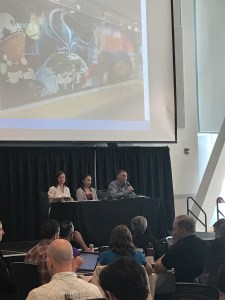
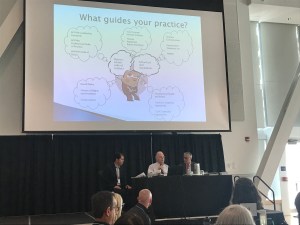
Legal and Contract Services Panel Discussion
Today was a lot of ‘legal stuff’ and understand roles, responsibilities, and what guides our practice as administrators. Our BCPVPA Legal and Contract services team was on hand to deliver a presentation, and supporting them was Allen Soltan of DLA Piper, LLP. Some of the topics covered included:
How the Law views the role of the Principal & Vice Principal
Guiding frameworks for practice (School Act, District Policy, TRB Standards, etc, etc)
Duties / Responsibilities of Principals & Vice Principals
Case Studies around social media use, duty to supervise
Use of force / restraint
Privacy / Access to Information
Workplace Bullying / Harassment & Discrimination
Elements of a personal services contract & benefits
Negotiation Agency of the BCPVPA
It was great to have bona fide legal advice on hand for the session to answer questions from our group. If I had a tip for next year’s group I’d say have all your burning legal questions ready to fire for this day.
Because we were organized in our Affinity Groups this day, we also had some great table talk with people in similar contexts. We also got a first peek at a phenomenal new resources for Principals and Vice Principals called the BCPVPA Start Smart Planning Guide.
Start Smart Planning Guide
While there’s no ‘how to’ manual for how to be an administrator, this new resource covers a lot of topics for new admin who may not even know what questions to ask or where to start. It’s being polished up and will be shared more widely soon, so keep your eyes out for it.
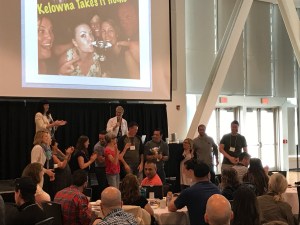
Kelowna claims their prize
Friday, Day 4 was also the day of our evening banquet held at Sage Bistro. We had a few speeches from guests, spent time and took photos with our family groups and even had a dance competition. And despite a strong showing from Prince George, and an unnamed city who pre-emptively put their names on the trophy, it was Kelowna who ended up winning the dance competition by being the town with the last members standing on the dance floor at the end of the night. It was also nice during this evening to reconnect with my colleagues from North Van to check in and see how their experience at short course had been going so far.
Sweet 16 at Sage Bistro
To finish out the week, Saturday’s theme was “Inspiration to Lead”. We started a bit earlier as breakfast was provided this morning. Our family groups gathered once more to start to the day, and we began once more with reflections on yesterday’s learnings.
9:00 – 10:00 Our first speaker for Saturday was Pat Duncan, Superintendent of Learning with the Ministry of Education. Pat had given brief words of welcome at the previous night’s dinner, but today we really got to hear some detailed information from him on behalf of the ministry. He introduced himself first and foremost proudly as a teacher, and in doing so reminded us never to forget that’s what we are. His main purpose was to talk about the new BC curriculum and the WHY behind it all. He took us through the origins of its creation and some of the guiding questions that drove the process, including “What is worth learning?” He encouraged us to imagine teachers as coaches, mentors and activators, not the keepers of knowledge. And that being good at work sheets and memorization are not top skills for students entering the workforce. To demonstrate the difference between knowledge and understanding, Pat showed us a great clip about the Backwards Bicycle.
11:00 – 11:20 David DeRosa, the new President of the BCPVPA gave a brief talk on leadership, focusing on health, wellness and balance, giving a background of the BCPVPA and encouraging members to be involved in committees like chapter council and the issues forum. Something to consider in the future for sure!
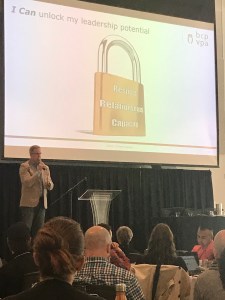
Kevin Reimer speaking about leadership potential
11:20 – 11:40 Our final formal presentation of the week came from Kevin Reimer, our outgoing President of the BCPVPA as well as the incoming Executive Director. Kevin’s talk was titled ‘Learning, Leading and Laughing’, with the tongue-in-cheek subtitle ‘Learning from Kevin’s Many Leadership Mistakes’. He told us a wonderful story about a school he worked with in Comox who made their theme for the year “We Can”, and picked a theme song by a relatively unknown artist named Jesse Ruben. Jesse ended up coming to visit the school to shoot a music video with the school, and his work supporting students through the ‘We Can’ project spread from there! Kevin also talked about the importance of credibility, and the need to re-establish it at every new school you work at, and contrasted the difference between deep influential power versus authoritative, ‘cheap’ power. His final piece of inspiration was a quote he keeps on a post-it note on his computer monitor, to “Increase the Life Chances of Every Child” – and this should be our focus every day!
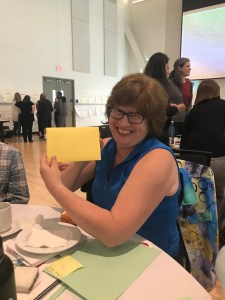
A thank you for our facilitator, Anne Smith
Short Course I was an inspiring, engaging (and exhausting!) full week experience of professional development. In the end, I would highly recommend it for any administrators who are early in their career. I think it was definitely valuable to have experiences to draw on, particularly during discussion times, so with that in mind I’d suggest that if you’ve never actually worked as a VP or P, it would be a conference better attended after you’ve spend a year in the role. The conference runs much longer than a typical day, so be prepared to spend your evenings out as well. I know many of the participants, particularly those from out of town, ended up staying at UBC in some of the rental housing, which is a great idea. Beyond the learnings and tools for the toolbelt, I just really enjoyed networking with a large group of people who were at a similar stage in their roles as administrators. You can never have a large enough support network for a role like this, and having people in other districts with a detached, informed and unique perspective on issues you may handle in the role is such an asset. A big thank you to organizers Liz, Jessica and Kim, and to our fabulous Group 16 facilitator, Anne! If you’ve attended a Short Course and have some perspective to add, please feel free to add your comments in the space below.
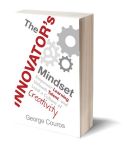
This past month I read George Couros’ The Innovator’s Mindset. It was a book that came a good juncture in my professional growth as I move from teaching to administration. The book walked a nice line between both a teacher and administrator’s perspective on how to foster a culture of innovation in classrooms and a school as a whole. As with any book on education, I try to see if what I read simply reinforces my existing beliefs, or if it challenges me to see things differently. While much of what Couros writes was already in line with my beliefs, there was a lot of food for thought in the book and moments where I paused to reflect on my own experience and ways I could try to reframe some of the work we’re doing at Handsworth. I thought I might share a few notes and highlights from the book that really resonated with me.
This year our overarching goal at Handsworth has been deeper student engagement, inspired by our work the previous year with Design Thinking. In The Innovator’s Mindset, Couros says that engagement is good, but empowerment is better. I have had a confluence of inspirations between my experiences at High Tech High with exhibitions of student learning, the self-assessment piece coming with BCs New Curriculum and now reading Couros’ comments of moving beyond engagement. I’m excited to see how we can move towards real student empowerment next year. One idea we are working with is to possibly restructure our twice-yearly parent-teacher interviews to have them be, rather, led by students who will share what they’ve been learning, perhaps with a portfolio of work.
One of the quotes Couros cited early in the book was from American educator and author, Stephen Covey, who talks about the speed of trust. As someone who subscribes completely to the idea that any organization is only as strong as its people and the relationships between them I agree wholeheartedly with the notion that things just get done, and get done faster, where there is an established culture of trust. This culture is developed, as Couros says, “by the expectations, interactions, and, ultimately, the relationships of the entire learning community.” But, even more importantly, relationships are built first on a one-to-one basis. I like Couros’ suggestion that as an administrator it is important to work with smaller staff groups of 2 to 4 people to create an intimacy that is lacking with larger assembly style groups. I have been fortunate to work with some great district administrators in North Vancouver who have also worked hard to create relationships with other staff in those types of smaller working groups. Networking is so important, because, as is mentioned in the book, “alone we are smart, together we are brilliant.” Strong relationships create an environment for innovation.
I had to laugh when the example of Blockbuster was brought up when illustrating the notion that organizations must “innovate or die”. I actually worked for Blockbuster all through my high school and university years. I was an employee there in the year 2000 when a small, little known company named Netflix began its mail order DVD program.
In what is now a fairly well known monumental business blunder, Blockbuster’s CEO had the opportunity to buy Netflix but decided to pass on it because he considered video streaming to be a niche market. Education is also a “business” that is experiencing a rapid transformation. Our students, as “clients”, have higher expectations than ever for how they will be served. It’s on us, collectively, to make sure we aren’t delivering a VHS experience where a digital one is required.
So how do we foster this innovative change we are so earnestly pursuing? Couros says that to inspire change, we must make a connection to the heart first before making a connection to the mind. And again, this really speaks to the importance of relationships – both between staff, and also staff and students. Inspiration comes from embracing possibilities. And as an educational leader, it is going to be incumbent upon me to help create those conditions where creative risk taking and positive change is more likely to occur. A culture of compliance is anathema to fostering innovation. Moreover, it’s important to realize that the improvement of our practice will never really have a finish line. We’re in education after all. If, as a discipline, we’re not constantly adapting and improving, then we aren’t truly living what it means to embrace that culture of learning.
Today, more than ever before, there seems to be this pronounced push and pull between innovative, personalized, big idea learning practices, and the forces of testing, compliance and traditional learning. Thankfully it seems that new thinking is beginning to win the day. School shouldn’t be about “what’s on the test”. It should be a safe and welcoming place where students have permission to make mistakes; to fail quickly and fail often so they learn to find success, not just in the classroom, but also in life. In reading The Innovators Mindset I was reminded of a John Green quote I love. To paraphrase, it goes, “About the test… The test will measure whether you are an informed, engaged, and productive citizen of the world, and it will last your entire life, and it will be comprised of the millions of decisions that, when taken together, will make your life yours. And everything, everything, will be on it.” Whether or not we prepare our students to be productive, happy and engaged citizen is the real measurement, I believe, of quality of the learning happening in our schools.
There was, however, one assertion Couros made that I wanted to challenge. He asks what is a student more likely to need to know how to write: an essay or a blog post, suggesting that the latter was more important. I understand the irony of questioning this within a blog post, but I have to say that any good piece of persuasive writing, be it an op-ed piece, a blog post or even an online review requires some understanding of ethos, pathos and logos – elements of persuasion that are the foundation of a good essay. This is in addition to understanding the importance of quality evidence and establishing a good structure. This is not to say the essay is the be all and end all, but it gives young writers a great foundation; a platform from which they can propel to all other forms of writing, including blog posts. But maybe that’s just the English teacher in me. Blogging is certainly important. Couros discusses what a fantastic professional development tool it can be, and I have to agree. While I know what I write is read by very few people, it encourages me to refine my thinking on topics in education – something I will increasingly be challenged to do as I navigate the world of administration.
As a budding administrator, Couros reminds me that the higher up any one person is in an organization, the more people they serve. I’m looking forward to serving more people than ever, and hopefully in the process being a force for innovation and change that can affect even more students. One of the most profound questions that came up frequently in The Innovators Mindset was, “Would I want to be a learner in my own classroom?” I will be serving many classrooms now; albeit in a different capacity, so I feel there is an enhanced responsibility to ensure that all classrooms in the school are safe and caring spaces for learning. But beyond that, I think for me, it’s also going to be important for me to ask, “Would I want to be a staff member in my own school?” The Innovator’s Mindset has given me some good inspiration in helping me make that a positive reality.
I’ve written previously on how important I think financial education is in schools, and so in the spirit of collegiality I’d like to share an example lesson I recently delivered in my class that illustrates well the kinds of activities a teacher who is looking to introduce business or personal finance might try.
This was taken from my business class’s unit on credit, and a lesson we were doing on credit cards. We’ll all likely need to access credit at some point during our lives, be it for a car loan, mortgage, student loan or even for consumer spending. My first message to the students when it comes to credit cards is that abstinence is best – but if we’re going to use them, we should be well-informed and responsible users.
By way of background, I use a course iBook with my students – a sort of custom digital course text I have developed for my class that contains all the content I plan to use throughout the year. Without going too deep into the details, it basically allows me the opportunity to employ a flipped-classroom instructional strategy, and keeps all of my traditional curricular content housed in one easy-to-access digital collection. My intent for this lesson was to create an activity based on student understandings of the different characteristics of credit cards. To that end, I have listed in the course iBook a series of definitions students need to have a handle on in order to make the activity a success. These definitions include things like ‘credit limit’, ‘cash advance fees’, ‘minimum payments’, and so on.
To begin the lesson I gave students a chance to refresh on those concepts so we could make sure everyone would be able to participate fully in the activity. I then assessed their prior understanding by distributing a handout with a set of Likert scale questions asking students how important they thought each of those features were when it came to selecting a personal credit card. Obviously having an understanding of what each of those terms meant would be a pre-requisite to evaluating their relative merit. My goal was also to see at the end of the lesson if the students still felt those were the most important characteristics after having completed the activity.
Creating laminated credit cards for the activity.
Once prior understanding had been assessed the fun could begin. Prior to class, I had created 60 laminated fake credit cards, enough for each student to have 2, and also created 20 different profiles of card based on 5 types of 4 different brands: MasterCard, Visa, American Express and Discover. I allowed each student to draw 2 cards and gave them an accompanying handout with 2 tables on which to record the specific features of their selected cards. On blue posters hung around the classroom were listed all the characteristics of the 20 different cards. All the students had to get up out of their chairs and circulate the room to the 10 different posters to find out what was ‘in their wallet’!
Once they had recorded the 10 different characteristics of their two cards, students returned to their seats to evaluate which of their two they felt was a ‘better’ card by drawing a star above that table.
Next, I asked everyone to get back up out of their seats for some real mayhem. Students were challenged to try and get the ‘best’ card possible by trading their cards with their classmates. There was a lot of wheeling and dealing during this period with students trying to convince each other to trade.
Students had to think critically about the different features of each card, what was important to them and how they could convince others of the qualities of their cards. This required a deep understanding of the characteristics of the cards and happened to be a lot of fun too. The students seemed to get a real kick out of trying to negotiate with each other for their laminated credit cards.
Negotiating a trade.
Once the trading started to slow I asked everyone to go back to their seats. I posed the question, “Who thinks they have the best card, and why?” Different tudents offered their opinions, and it was during this period that we really understood that what constitutes a ‘good’ card really depends on personal preference. Do you prioritize having a low or no fee card? Do you prefer having a particular rewards program associated with your card? Or maybe cash back? Is being able to perform a no fee balance transfer with an interest grace period important? The answer completely depends on the profile of the user.
I finished the lesson by going through, one last time, each of the 10 different features we highlighted reflected upon the merits of each as they pertained to particular user profiles. For example, foreign transaction fees would be more important to a user who travels often… making only minimum payments is a recipe for disaster for all credit card users… and we also had a rich discussion about what merchant fees are. We even tied in a current event where Walmart and Visa had a dispute over merchant fees. In the end, the students came away with a much richer understanding of the complexity of credit and credit cards, and can now make a more informed decision when it comes to, first, whether to have a credit card or not and, secondly, which card features will be important to them if they do decide in the future to make use of one. And they were engaged and having fun along the way.
I’ve made free use of some of the resources I’ve developed for this lesson here on my blog. Feel free to use them or alter them as you see fit. If you have any suggestions as to how I might improve this activity, please leave me a message in the comments section below.
Last year I wrote a blog post on the indigenisation of education in BC and mentioned in it how I hoped to infuse more indigenous ways of learning into my practice. Having just returned from our annual Japan Exchange, I thought it was a good time now to update that previous post with some fresh perspective.
For the past 8 years I’ve led the our school’s Grade 9 Japan Exchange, welcoming students from Inage Secondary School in Chiba each October, and returning to Japan every April. This past year I endeavoured to add more curricular connections to the itinerary by revising our tour to go through Hokkaido, the ancestral home of Japan’s indigenous people, the Ainu. This was done with the express purpose of better aligning our cultural experiences in Japan with the indigenization of BC’s new curriculum. My intent was to have students think critically about the commonalities between the historical narrative of the Ainu as compared to our own BC Indigenous peoples.
The following are some of my observations from those experiences, but I should stress that my understanding of the Ainu is cursory at best.
Ainu Museum
Our trip took us to the town of Shiraoi in Hokkadio, home to Ainu Museum at Porotokotan. The word ‘Porotokotan’ is actually an Ainu word that means “village by the large lake”. In fact, many of the names around Hokkaido including Shiraoi and Sapporo come from the Ainu language. This is not unlike North Vancouver (and BC more broadly), where places names like Capilano and Klahanie draw their origins to the Squamish language.
And the comparisons only begin there. In visiting the Ainu museum, our group of 30 students and 4 teachers learned a great deal about this once vibrant culture. For example, traditionally, Ainu girls would get large tattoos around their mouth, the result of ash smeared in small cuts, to show their marriage eligibility. Because the tattoos were so elaborate and painful, they were completed slowly over time typically starting at age 7. This was just the first of many examples of practices outlawed by Japan’s government. The Meiji government, similar to the Canadian government, also outlawed the use of the Ainu language. The erosion of Ainu culture and language were, at the time, seen as modern cultural advances – not unlike the dogma prescribed to in Canadian residential schools. It wasn’t until the 1990’s that the Japanese government started to recognize the uniqueness of Ainu culture. In 1997 the Ainu Cultural Promotions law finally recognized the need to preserve their culture. Unfortunately for all intents and purposes it was too little too late.
Ainu Museum
What is even more unfortunate is that today studying the Ainu is really a cautionary tale – they represent, in essence, a dead culture. You don’t go to museums to see living, vibrant examples of culture. You go to museums to see relics of the past, and that’s really what it felt like going through the Ainu Museum. It’s frightening to think how close we came to having the very same end to some of our local indigenous cultures in North Vancouver. According to Wikipedia there are as few as 10 people who can still speak Ainu. As far as I can tell, unless at least a small sub-community is conversing regularly with each other in a language, it is all but extinct. In Porotokotan we watched dance and musical perfomances in thatched-roof houses, smoked salmon hanging overhead. And although Hokkaido is almost 7,000 kilometers from Vancouver I strangely felt very close to home. Whether it was the song and dance, the hanging salmon, the carved dugout canoes outside or, sadly, the visibly devastating impact of colonialism on this community, it was clear to me that this culture had far more in common than not with Indigenious peoples of North Vancouver. It made me thankful, more than ever, that we are doing everything we can now to preserve and honour the Indigenous culture and heritage of Canada’s First Peoples, and not forgetting them in a dusty museum.
Design Thinking is one of the vogue, and sometimes vague, edu-terms being used today. Design Thinking, simply put, is really an approach to an issue or problem that asks one to think like a designer. Using the design process educators and people in other fields are able to develop new and innovative ideas or solutions to existing problems. The design process is broken down into five distinct phases, each with an accompanying key question.
At Handsworth, we’ve been attempting to use Design Thinking and the design process to address challenges and to further enhance student engagement as a principle school goal this year. This is most evident in the introduction of a new timetable for the year that includes a unique block once a week we call ‘innovation time’. Because the ‘innovation time’ block always occurs on Wednesdays, we now refer to them as ‘Innovation Wednesdays’.
So what exactly is ‘Innovation Time’ and what challenges inspired us to embark on the design process?
In recent years we’ve increasingly heard from staff the desire for more time to do creative departmental and cross curricular projects and to have more time simply to connect on projects with colleagues, but lamentations that our current timetable just doesn’t have the flexibility to accommodate it. Our school-based leadership group felt compelled to try and respond to this challenge by designing, prototyping and implementing a solution. A proposal was made to our school district to modify our Wednesday morning timetable to carve out an additional period to provide the flexibility needed to implement the initiative. At the end of last school year the board approved the idea, and for the 2016-17 school year we began to try it out. It was important for us that this new initiative be one that staff wanted and responded to a staff need, and that it wasn’t something pushed down on us from above. Support and earnest enthusiasm from staff for the project would be integral to its success. And if we could increase student engagement in the process it would clearly be of great benefit to everyone.
Some examples of what’s been occurring during innovation time include:
Innovation Wednesday Ballroom Dance
-Guest speakers from the community coming in to give presentations
-New clubs emerging, including chess club, investing club, and debate
-Existing clubs having more time to meet and collaborate
-Less student stress and anxiety as a result of time to work collaboratively in groups or write missing tests or quizzes
-Students learning new skills like ballroom dancing
-Peer mentoring and cross grade tutoring in subjects like math and science
Innovation Wednesday Yoga
-International students tutoring students in languages
-Hands on projects like making chainmail, scrap booking & RC Airplanes
-Grade assemblies
-Yoga, mindfulness & meditation sessions
-Tutorial time for teachers to meet with students who need extra help
This is by no means an exhaustive list. And what we’re seeing more of is students actually leading Innovations Wednesday sessions themselves. This has provided a great opportunity for leadership amongst the students, and a space for students and teachers alike to share and nurture their passions. Finally, this has also freed up some time for teachers who want meet to discuss things like new curriculum and other departmental concerns that are difficult to address when everyone’s prep time falls during different blocks.
Christmas break marks the end of our trial period for Innovation Wednesdays, and I’m pleased to report that it has been enough of a success that we’ll be continuing it throughout the rest of the year. Our barometer for success takes us back to the original impetus for its introduction: cross and inter-departmental collaboration, and increased student engagement. And by most accounts, that is exactly what we are seeing.
The implementation of Innovation Time has not been without its challenges. Like any design process, some element of failure is expected and even welcomed if we are to have our solutions evolve and improve. Innovation Time has required added effort from both our teachers, who now often need to plan for another weekly activity, and our administration, who basically create a new rec guide for students each week. We continue to bounce between step 4 and 5 of the design process, experimenting and evolving what Innovation Wednesday looks like. To this end, as we entered the break, we asked both staff and students to provide their feedback.
Educators are, inherently, designers. We make choices every day from designing the delivery of curriculum to, as we have seen, the structure of our school timetable. Taking an unconventional approach to challenges we face in education requires a new paradigm – one Design Thinking and the design process can offer. Innovation Wednesday’s at Handsworth, although in their infancy, represent a successful implementation of a Design Thinking solution.
This past Friday was the fourth annual “Orange Shirt Day” in schools across BC. This annual observance, coupled with the ushering in of BC’s new curriculum provides a wonderful opportunity to reflect on the movement to indigenise education.
Orange shirt day began in 2013 as a day to highlight the terrible treatment of First Nations students in residential schools across Canada. It was inspired by Phyllis Webstad, a Stswecem’c Xgat’tem First Nation elder in Williams Lake, BC, and by her experience at residential school in 1973, when she was only 6 years old. As a young girl, upon entering the school, she was stripped of her prized orange shirt. Similarly, the identity of many First Nations students was stripped away as a result of their horrible experiences in residential schools across the country.
Orange Shirt Day T-Shirt
Many people in North Vancouver don’t realize we had our own residential school here in our community. More than 2000 First Nation students were sent to St. Paul’s Indian Residential school, which was once located on Keith Road where St. Thomas Aquinas school now stands today. I think it’s important to know, as a North Vancouverite, that these schools were not just in far-flung, remote locations, but were embedded and accepted in our very own community at one time.
The recent move to indigenize BC’s curriculum came about in response to Canada’s Truth and Reconciliation Commission’s 94 ‘calls to action’. These 94 policies and programs are intended to help repair the harm caused by residential schools and move our communities forward with the reconciliation process.
Among the calls to action included points specific to education, including making, “age-appropriate curriculum on residential schools, Treaties and Aboriginal peoples’ historical and contemporary contributions to Canada a mandatory education requirement,” and, “developing and implementing … curriculum and learning resources on Aboriginal peoples in Canadian history, and the history and legacy of residential schools.”
And so this year we continue our good work to try and find ways to incorporate indigenous teachings and ways of learning. It’s a sensitive task, and one that I believe deserves our most earnest and honest efforts. The path, however, is far from straight. There are examples that illustrate how muddled the path can become, such as Ecole Lajoie in Montreal where teachers and grade 3 students learning about indigenous history were given headdresses to wear. Unbeknownst to those teachers, it is seen as disrespectful for non-First Nations people to wear headdresses, as there is a cultural and spiritual significance associated with them. This is not to suggest, however, that we shouldn’t be trying. Sometimes we are too afraid of offending or saying the wrong thing that we do nothing. Having good intentions is noble, but it is equally as important to make sure the steps we are taking are culturally sensitive and authentic means of closing the reconciliatory gap.
8 Aboriginal Ways of Learning
So what are some positive ways we can genuinely contribute to this process of indigenizing education for our students? To provide us with inspiration, we can begin by examining the 8 aboriginal ways of learning. This is a pedagogical framework that allows teachers to include aboriginal perspectives by using aboriginal learning techniques, and includes the following:
Story Sharing: Approaching learning through narrative.
Learning Maps: explicitly mapping or visualizing processes.
Non-Verbal: Applying intra-personal and kinesthetic skills to thinking and learning.
Symbols and images: Using images and metaphors to understand concepts and content.
Land-links: Place-based learning, linking content to local land and place.
Non-linear: Producing innovations and understanding by thinking laterally.
Deconstruct / Reconstruct: Modeling and scaffolding, working from wholes to parts. Begin with the whole structure, rather than a series of sequenced steps.
Community Links: Centering local viewpoints, applying learning for community benefit.
Some of these techniques you likely already recognize from your own classroom, or other classrooms you’ve been in. I recently had a conversation with a friend of mine taking his MBA at Simon Fraser University and he was telling me how his first class on leadership was all about the power of story telling, and how leaders can communicate messages more clearly and memorably through story. It struck me as interesting how one of the most rigorously academic programs one can take draws inspiration, perhaps unknowingly, from aboriginal oral tradition.
Students Creating ‘Sound Maps’
Simply being aware of the aboriginal ways of learning has allowed me to recognize it much more often in the daily teaching and learning practices I observe. Two weeks ago our school hosted a retreat for grade 8 students just entering high school. We took them up to our local outdoor school in Cheakamus for an overnight camp experience filled with workshops, many of which were infused with aboriginal ways of learning. In one exercise the students sat quietly, spaced out from their peers, drawing a sound map using symbols to represent what they heard around them. It was such a great activity, and blended so many of the ideas of aboriginal teaching together by being non-verbal, connecting with nature, using symbols and images, and by writing on a learning map. Not to mention the meditative qualities and social-emotional benefits that space and silence in a natural setting with peers provided.
Adina Williams, Key Note Speaker
Other examples in recent memory have been even more overt. At our schools “Heart Talks” assembly last year we had a remarkable keynote speaker named Adina Williams come and share her story of growing up as a member of the Squamish Nation in North Vancouver. We also had some of our English 11 classes learn a few words and phrases in traditional Squamish language. What an incredibly authentic learning experience, and a great opportunity for local First Nation youth to take a leadership role and pride in sharing their ancestral language. Yet another central tenet of aboriginal ways of learning relates to experiential learning – a concept I’ve already blogged about recently as an important way to connect students learning to their surroundings. These are all remarkable ways to help build community understanding and make a tangible effort to bridge that reconciliatory divide.
I’ve been trying to think of new and different ways to engage students in thoughtful reflection of the importance of learning about aboriginal communities, and in doing so have realized that the circumstances we find ourselves in are actually replicated similarly in other areas of the world. The past two summers I’ve taken students on study abroad tours to Australia, where the indigenous aborigines there have also suffered through generations of mistreatment, which to some extent still continues today. And the students who were with me were instantly able to recognize the parallels between aborigine and First Nation communities. On a related note, for the past 7 years I’ve also led our school’s annual Japan exchange. This year, and for the first time in over 25 years of its existence, I have altered our trip itinerary with the express purpose of exploring indigenous culture in Japan. Our route this year will now take us northwards to Hokkaido where we learn about the culture and traditions of Japan’s first people – the Ainu. It is my hope that we can, with our students, draw more parallels between the indigenous culture we find there and some of the traditions and ways of learning we see in First Nations culture. I’m excited to use this as yet one more opportunity to broaden students’ understanding of First Peoples.
The benefits to teaching using aboriginal ways of learning are many, and go far beyond the moral duty we have to try and heal our communities. One of the most important elements, I believe, is that the development of empathy in students can benefit everyone as we foster a more caring, peaceful and civil society.
The indigenization of education in BC through the new curriculum will take on many forms. It’s important that we, as educators, and indeed as a wider community, continue to make every effort to build bridges and reconcile ourselves with our First Nations neighbours. Indigenous ways of learning are one way we can start that process in our schools. As an educator I’m excited to see where this conversation takes us and am confident it will be, invariable, to a better place.
First let me say that experiential education is about more than travel. But after having taken students on more than 25 study abroad tours, I can certainly say that it illustrates most clearly what a profound impact a quality travel experience can have on the learning process. Experiential education is learning by doing: by seeing, by touching, by hearing and by feeling. If it’s good, it’s immersive. Which is why we can’t simply expect students to show up in an exotic, foreign location and have the learning be any deeper unless we, as teachers, make a concerted effort to make connections between the learning and world around us. Wouldn’t we all love to be able to learn about symbiotic relationships in the rainforests of Brazil? Relive the communist revolution while standing in the middle of Tiananmen Square? Or understand the tumultuous nature of the stock market on the steps of the New York Stock Exchange? I’ve seen what this does for student engagement, and it’s remarkable. Virtual reality may afford us the luxury of teaching in such settings on a daily basis at some point, but until that day comes, how can we bring a small piece of that fire into our classes now? If we look at the basic underlying ideas of what makes travel learning so profound, I think we’ll find some of those elements can still be applied in our everyday classes.
Be active. In every lesson, ask yourself if there’s a way I can have students moving. Movement creates energy and excitement. It’s tough to be asleep at your desk if you’re required to be moving around the classroom.
Students learning about Game Theory and the Prisoners Dilemma with an activity.
Questions where students can move into a line representing a spectrum of opinion, or challenges that involve organizing a group into a tableau or pose are fun.
Be social. How much interaction can you promote between your students? Have them discuss. And not just with the person next to them. Shuffle the room. What a wonderful feeling it is, as a student, to have the opportunity to interact with each and every classmate. The emotional benefits to students feeling connected not only with their teacher, but also with all their classmates, can be immense. Jigsaw activities and randomizing the selection of working groups for projects can be great for this.
Make connections. Context is important for lessons. Why are we learning this? If you can’t answer this as a teacher, chances are the students are going to find very little value in it, and therefore won’t be engaged. Why not start each lesson or each unit explaining the practicality of what’s being learned? We are learning about compound interest so you can calculate what you’ll earn on your Canada Savings Bonds. We’re learning Shakespeare so you can better deconstruct some of our most timeless stories and understand how he’s inspired many of our films and stories today.
Use artifacts. When traveling we often get to handle cultural objects: from tools and cloth, to carvings, fossils and coins. There’s no reason we can’t bring those into our every day classes as well.
Students discovering archeology artifacts.
Being able to touch something foreign makes it more real for students. Try on a kimono in Japanese class. In a European history class, distribute a few Euros and talk about who or what is on the coins.
Appeal to the senses. Artefacts are great for touch, but what about smell, taste and sound? Food doesn’t have to be reserved for cooking class. Learning about Spanish culture over a delicious meal, or about this history of Japan with a sushi break can be a fun way to shake up a class. Play music. I can still remember my history teacher playing the song ‘Rasputin’ as we entered class to learn about the Russian Revolution.
Encourage reflection. On the majority of student tours I’ve led, we’ve had our students journal on an almost daily basis. It’s remarkable to see the transformation in worldview, as they increasingly become global citizens. Journaling is only one form of reflection. Blogging, exit slips from class, and student interviews are just a few other small suggestions for ways to have students reflect on their experiences and thereby reinforce learning and clarify their own values.
Find experts. Guest speakers are great way to introduce students to new ideas. Having a different voice in the class with a different set of experiences and knowledge can be a huge benefit. It also strengthens the connection between your school and wider community. Experts may be in your class. Don’t
Business students meet the Consul General of Canada in Hong Kong – An Expert on Import & Export
underestimate the expertise of your students and their experience, or perhaps their parents. Use online resources like Twitter to connect directly with inspiring professionals like astronaut Commander Chris Hadfield or popular authors like JK Rowling to answer questions. All of these people can all be great resources for sharing and learning.
Encourage a sense of wonder. Students who are curious about how and why things are as they are will be enthusiastic to increase their understanding and critical thinking skills. Why do the stars shine brighter away from cities? Why are there similar words for numbers in different languages? Why is it summer during Christmas time in the southern hemisphere? Model curiosity. It’s okay as a teacher not to know the answers… we can find out together as a class!
This list is by no means exhaustive, but hopefully will help you think about some other ways you can bring a love of experiential learning into your classroom. I love to learn by traveling, and enjoy sharing that passion with my students. Experiential education doesn’t have to be limited to those with a passport though. We can bring those same ideas into our everyday learning to help promote greater student engagement and quality learning.
My First Slice of Pi: Discovering Raspberry Pi with my Class
Raspberry Pi is an exceptionally small, inexpensive and simple computer used to help teach students about hardware and programming. My former principal first introduced it to me, suggesting that Pi might be a neat activity to try with one of my computer classes. Not knowing anything about, I started researching what it was all about.
What is Raspberry Pi?
To quote Wikipedia, The Raspberry Pi is a series of credit card–sized single-board computers developed in the United Kingdom by the Raspberry Pi Foundation with the intent to promote the teaching of basic computer science in schools and developing countries.
How I Got Started
I decided that the curriculum of my Business Communications course, a precursor to senior programming classes, best fit the intent of Pi. Funds to purchase 16 Raspberry Pi 2, Ultimate Starter Edition, were generously provided through my school PAC, and my school administration. I got 16 of them so I would have at least 1 for every 2 students, as well as one Pi as a teacher demo model. Not knowing anything about Raspberry Pi I began by watching a number of different YouTube videos on how to get started. There are countless videos out there, but here’s an example of one I watched:
Growing Pains
I took the opportunity on one of our professional development days to figure out how exactly to have my students dive into Pi. Here’s a summary of what I learned:
Despite purchasing the “Ultimate Starter Kit” for my Pis, I didn’t have the proper adaptor to enable the Pi to be plugged into our Dell monitors. The Pi has a built in HDMI port, and an HDMI cable was included, but I had to also purchase HDMI to VGA converters so we could use our monitors. It also only came with only male-to-male breadboard jumper wires. A few of the projects students found online later required the use of male-to-female wires that we didn’t have. My first lesson was to never assume all the hardware needed will be included! There are always additional costs to consider.
I spent a considerable about of time learning about how to format the SD card and download the NOOBs (New Out Of the Box operating System). Because I don’t have the proper administrative privileges on our school computers, I had to request that our district IT team install special formatting software on a few of the computers. I only realized later that because I had ordered the Ultimate Starter Kit that the SD cards included already have NOOBs on them.
My first time turning the Pi on was anticlimactic. I had the monitor, USB mouse and keyboard, Ethernet cable, and power plugged in, but nothing appeared to be working. I realized after that I had to have the power cord plugged in last, not first. I unplugged everything and plugged it all in again, attaching the power last, and it finally fired up!
Starting with Students
First Lesson
My first “lesson” with the students was spent looking at the different components of the Pi. After all, one of the great educational aspects of the Pi is the opportunity to identify different hardware pieces. Next we had to insert the mini SD card and install the operating system Raspbian and Scratch. In order to do this we had to start attaching some peripheral hardware to interact with the Pi. This involved taking all the mice, keyboards and monitors from our classroom computers and plugging them into the Pi. This was tough because everything is tied together so securely for fear of theft that some of the cables were difficult to access. Installing the operating system took about 25 minutes, but because the students were in pairs I could have them shift to another computer to continue working on another class project. At the same time we were also working our way through Codecademy, so I had them work on that. Providing sufficient time at the end of each class was important as it took some time to plug all the mice, keyboards and monitors in again and ensure they were working properly for the next class.
Second Lesson
When in doubt, read the instructions. The students and myself were both a little mystified when we were asked for a username and password during the next book up, even though we had never previously set one up. Thankfully in the accompanying instruction manual we found that the username was ‘pi’ and the password ‘raspberry’.
During the second lesson we made sure everyone had installed the operating system properly. It took some time to set up the devices again with the monitors and other peripherals but once we were all booted up the students finally had a chance to start interacting with the device. From the main menu there are basically 2 options – you can go to the command line Raspbian or to a program called Scratch, which is a free visual programming language. If you go to the command line and type in “startx” the Pi launges a graphic user interface which has a few other programs you can easily access, including a version of the popular game Minecraft.
During this class, students familiarized themselves with the boot up process, and how to access some of the different programs both through scratch and the GUI. Students who were comfortable with the interface could go and try out the Scratch website also, which has a great tutorial.
Third Lesson
During lesson three we began looking at Raspberry Pi projects that the students could try out. Raspberrypi.org has a bunch of neat simple projects as options, but there are many other more sophisticated ones to be found on the web.
Because we had a breadboard included in the kit, I printed off instructions for students to do some simple breadboard – LED activities. As previously mentioned, all the wires we were given were male-to-male, so I had to also order a bundle of male to female wires off amazon for $10. Students were encouraged to do a more ambitious project if they wanted.
A friend of mine had taken a Raspberry Pi and turned it into a Super Nintendo simulator. I brought that into the class and plugged it in for the kids to see. It’s one thing to tell them what they can do, but being able to show them a finished product was even cooler. This inspired some students to research how to make one themselves. Because some projects that were larger may have needed students to buy other peripheral hardware like controllers, I provided an added incentive saying that if anyone came up with a substantial project that required some personal investment on their part, that they could take the Raspberry Pi home permanently when they were done their project.
Work on their projects consumed our third and fourth lessons.
Assessment
One of the biggest questions I got was “How are we going to be marked on this?” Lesson 5 was spent addressing assessment. Although the formative assessment that was ongoing throughout the project classes was also remarkably evident. Students with a more proficient skill set had the opportunity throughout the lessons to provide peer support… and I even noticed some scaffolding of their classmates learning!
During lesson 5, students were required to do a reflection and discuss to what extent were they successful in completing the project they set out to do. They were asked what they learned and what they’d do differently.
My Own Reflection
As a type A teacher, a complete lack of instructional structure was a bit terrifying, but with the recent push for more personalized and project based learning, I thought this experience represented an excellent opportunity to loosen the reins a bit.
The next time I do this project, I’d like to have more self-paced mini-projects to provide the students, so those with few ideas can at least feel like they did something substantial with it. I feel like some students viewed the Raspberrypi.org projects daunting despite their apparent ease. I’d have more wires etc. so the class would be less limited by the hardware constraints.
Providing a working example of a successful video game emulator really captured the students’ attention. If I have access to the same system next time, I’ll certainly be sure to make use of it again.
The administrative privileges on our computers make it incredibly difficult or impossible to download or install anything. We needed to download and install different card images on the SD cards depending on the project the students wanted to do, but couldn’t because we didn’t have the necessary permissions. There was a program we needed to use to reimage the cards, but we weren’t able to download it. I tried to download it onto my school laptop, but the same restrictions were in place. That was probably the most frustrating part of the experience and one that is common to many projects we try and do with technology.
I think it’s important to always try new things. Failure is okay. Some of the students I know have been inspired to try and do bigger and better things with the Pi on their own time / during lunch hours, which I think is great and has to be considered a success. 5 lessons as an introduction were perfect for this year and I hope to be able to build on this ‘first slice of Pi’ with my new understanding of the device in the years to come.
“Shakespeare sucks.”
“Ughhhh…” The groans from the back of the class are audible.
“I don’t even understand what he’s saying.”
“The plays are so old and boring.”
“What does this have to do with anything?”
You get the idea.
Every year students roll their eyes, let out a sigh and drag themselves through yet another Shakespeare unit. There are, however, a few students who actually appreciate the opportunity to study the Bard in all his glory, and here are a few reasons why you should be one of them.
Yes, I was one of those theatre nerds, those drammies, who loved Shakespeare in high school. I revelled in stories of witches, ghosts and the supernatural. I loved playing with accents, like those of the Scottish lords in Macbeth. And I was struck by the wonder of reciting the very same lines of dialogue uttered by thespians countless times from The Globe Theatre to Broadway. “To be or not to be…”, “Now is the winter of our discontent…”, “All the world’s a stage…” – these were the timeless lines I could make my own that connected me to the great cannon of Western theatre. And in commandeering those lines I came to appreciate the beauty that was, is, and continues to be Shakespeare.
By some counts Shakespeare has contributed as many as 2000 unique words to the English language, which is already reason enough for high praise. From ‘assassination’ to ‘swagger’, Shakespeare has offered us a myriad of ways to express ourselves more succinctly. So the next time you’re talking about how ‘swag’ you are, you’ve got Shakespeare to thank! And that’s just the beginning… what about all the full phrases he’s contributed? Whether you are ‘breaking the ice’, bidding ‘good riddance’, arriving at a ‘foregone conclusion’ or observing that ‘love is blind’ or someone has a ‘heart of gold’, you are once again using the words of none other than Billy Shakespeare.
Shakespeare used his words in a variety of inspiring ways; both in poetry and plays, as well as historical and political commentary. He was deftly able to infuse, with such delicacy, poetry right into the very dialogue of his plays. Take, for example, the famous first exchange between Romeo and Juliet, which is itself a prime example of both a sonnet and iambic pentameter. This is a stroke of genius so subtle, so sublimely natural, that one has to look closely for it so as not to mistake it for simple dialogue.
ROMEO [To JULIET.]
If I profane with my unworthiest hand
This holy shrine, the gentle sin is this:
My lips, two blushing pilgrims, ready stand
To smooth that rough touch with a tender kiss.
JULIET
Good pilgrim, you do wrong your hand too much,
Which mannerly devotion shows in this;
For saints have hands that pilgrims’ hands do touch,
And palm to palm is holy palmers’ kiss.
ROMEO
Have not saints lips, and holy palmers too?
JULIET
Ay, pilgrim, lips that they must use in prayer.
ROMEO
O, then, dear saint, let lips do what hands do;
They pray — grant thou, lest faith turn to despair.
JULIET
Saints do not move, though grant for prayers’ sake.
ROMEO
Then move not, while my prayer’s effect I take.
[Kisses her.]
Thus from my lips, by yours, my sin is purged.
JULIET
Then have my lips the sin that they have took.
ROMEO
Sin from thy lips? O trespass sweetly urged!
Give me my sin again
His plays were not just a mix of prose and poetry – they were a commentary about the time in which they were written. Shakespeare, like most artists, needed to curry favour with the political power of that era. First this meant trying to be in the good graces of Elizabeth I, the last Tudor monarch, and then later those of the first Stuart king, James. Historians point to a number of Shakespeare’s plays, most notably Richard III as propaganda for the Tudors, and Macbeth, an offering to James I, as being influenced heavily by the political climate of the times. Shakespeare, a man ahead of his time, was able to create entertainment for the masses while simultaneously appeasing the political forces that ruled the day. Students who are brought to appreciate the historical context of many of Shakespeare’s plays will hopefully understand even more how these stories were not only technically intelligent in their use of prose and poetry, but also intelligent in their political commentary.
Shakespeare’s works run the gambit of human experience; from comedies and tragedies to histories and the supernatural, they allow the audience to explore the ideas of revenge, betrayal, romance and fantasy without consequence. We are left to wonder how we would cope if our familial circumstance kept us from our one true love as in Romeo & Juliet, or if we would act more judiciously in dealing with Shylock in the Merchant of Venice. Shakespeare allows us to explore human nature through intricately detailed stories, and dynamic, fully developed characters. He facilitates the very discussion that is at the essence of any good English class – what it means to be human. Shakespeare elevates this discussion with the sophistication of his writing and the expectation he has of his audience. His plays and sonnets are not dumbed down; rather he challenges you to read between the lines, discover the irony, allusion and veiled meanings of his prose.
At The Globe Theatre in London with my students to see Richard III
The works of Shakespeare are so profoundly clever that it has brought speculation as to whether his writings could really have been from only one man, or indeed from a man of such limited education. I remember in high school being so intensely interested in this question. I wrote a paper on the Earl of Oxford being the real author of Shakespeare’s works simply because I so loved the idea of a literary conspiracy. Other proposed ‘real’ authors of his works include Sir Francis Bacon and Christopher Marlowe, among others. The vast majority of Shakespearean scholars agree, however, that Shakespeare did exist and wrote his own work. But these myths just add further intrigue and interest in the Bard. And if that wasn’t enough to pique your interest in who he really was, then take a closer reading of Sonnet 126 and try to imagine to whom he may have been writing.
Shakespeare’s influence has been so far reaching that it’s hard to think of any modern film or story that hasn’t, at least in some way, been inspired by his work. From Disney’s The Lion King, to Star Wars, to the Twilight series, there are recurring plot sequences and thematic elements that have been stripped right from the pages of Shakespeare. If you’re a modern cinema buff, chances are that you’d enjoy a bit of Shakespearean theatre too! His plays even have just the right amount of innuendo to offer a class full of (sometimes inappropriate) laughs. For a milder example, refer back to the aforementioned Romeo and Juliet passage where the young couple reference a pilgrimage yet unmade to a place neither has been before. His works are riddled with even juicier examples.
So what’s so great about Shakespeare? In a word: everything. His contributions to the English language, deft use of weaving prose and poetry together, political commentary, wit and humour, and most importantly the inspiration to examine our own human nature are all reasons we should be excited to study his work. If ‘brevity is the soul of wit’, we can surmise in brief that Shakespeare is pretty swag.



 This past month I read George Couros’ The Innovator’s Mindset. It was a book that came a good juncture in my professional growth as I move from teaching to administration. The book walked a nice line between both a teacher and administrator’s perspective on how to foster a culture of innovation in classrooms and a school as a whole. As with any book on education, I try to see if what I read simply reinforces my existing beliefs, or if it challenges me to see things differently. While much of what Couros writes was already in line with my beliefs, there was a lot of food for thought in the book and moments where I paused to reflect on my own experience and ways I could try to reframe some of the work we’re doing at Handsworth. I thought I might share a few notes and highlights from the book that really resonated with me.
 One of the quotes Couros cited early in the book was from American educator and author, Stephen Covey, who talks about the speed of trust. As someone who subscribes completely to the idea that any organization is only as strong as its people and the relationships between them I agree wholeheartedly with the notion that things just get done, and get done faster, where there is an established culture of trust. This culture is developed, as Couros says, “by the expectations, interactions, and, ultimately, the relationships of the entire learning community.” But, even more importantly, relationships are built first on a one-to-one basis. I like Couros’ suggestion that as an administrator it is important to work with smaller staff groups of 2 to 4 people to create an intimacy that is lacking with larger assembly style groups. I have been fortunate to work with some great district administrators in North Vancouver who have also worked hard to create relationships with other staff in those types of smaller working groups. Networking is so important, because, as is mentioned in the book, “alone we are smart, together we are brilliant.” Strong relationships create an environment for innovation.


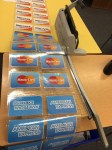
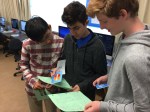


 In the end, the students came away with a much richer understanding of the complexity of credit and credit cards, and can now make a more informed decision when it comes to, first, whether to have a credit card or not and, secondly, which card features will be important to them if they do decide in the future to make use of one. And they were engaged and having fun along the way.
 I’ve made
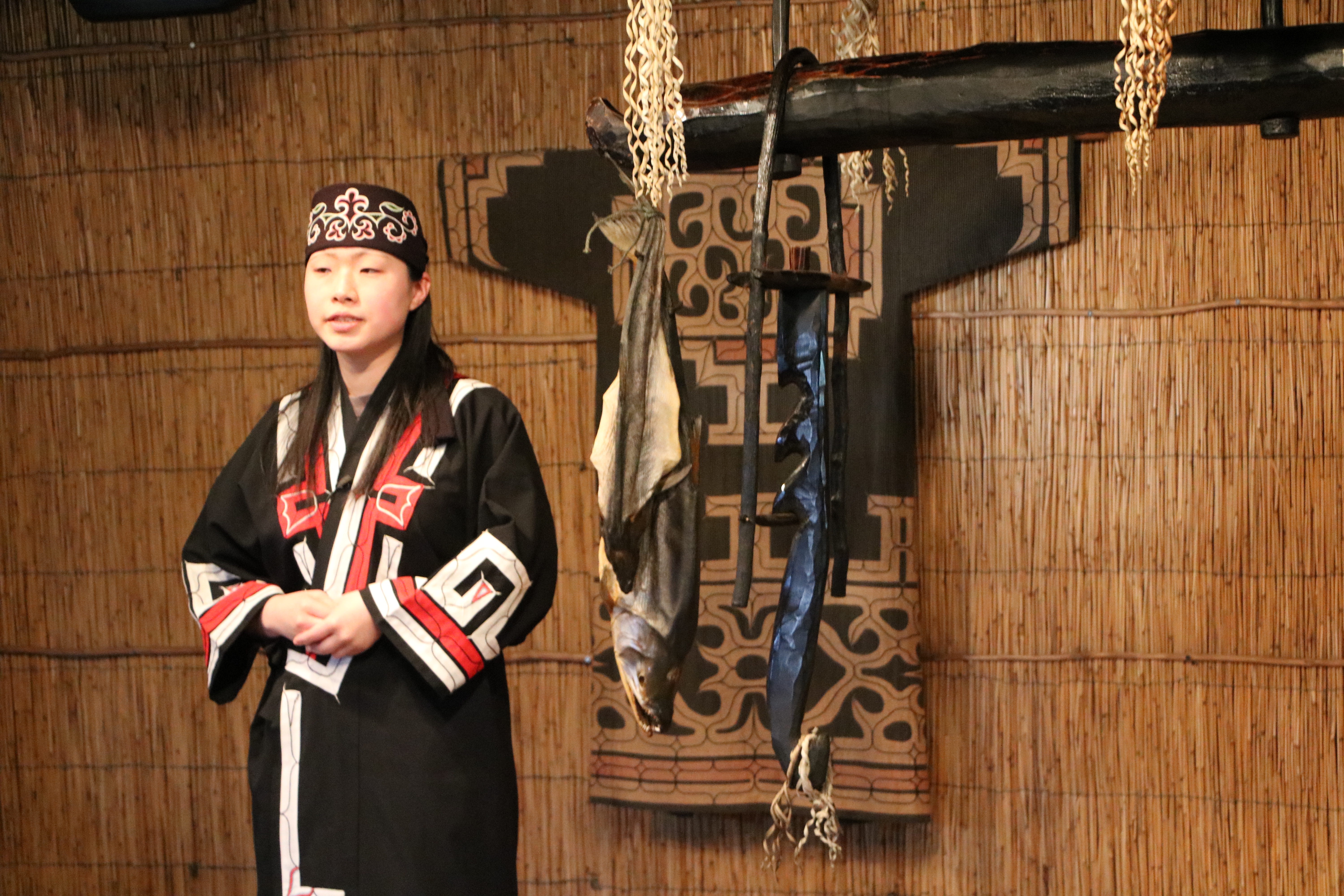
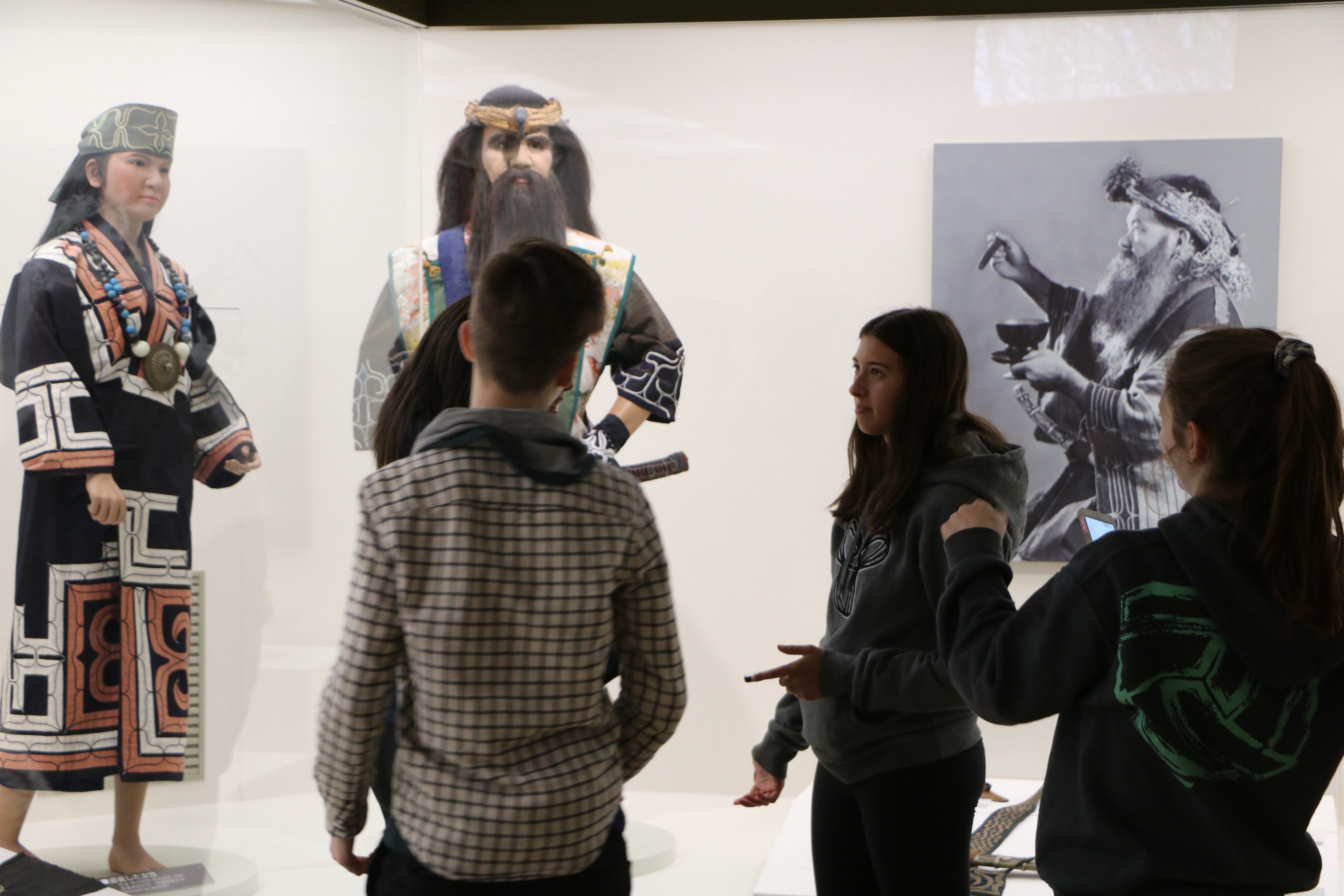
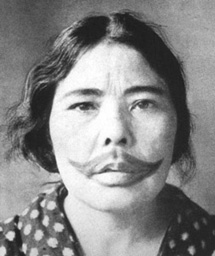
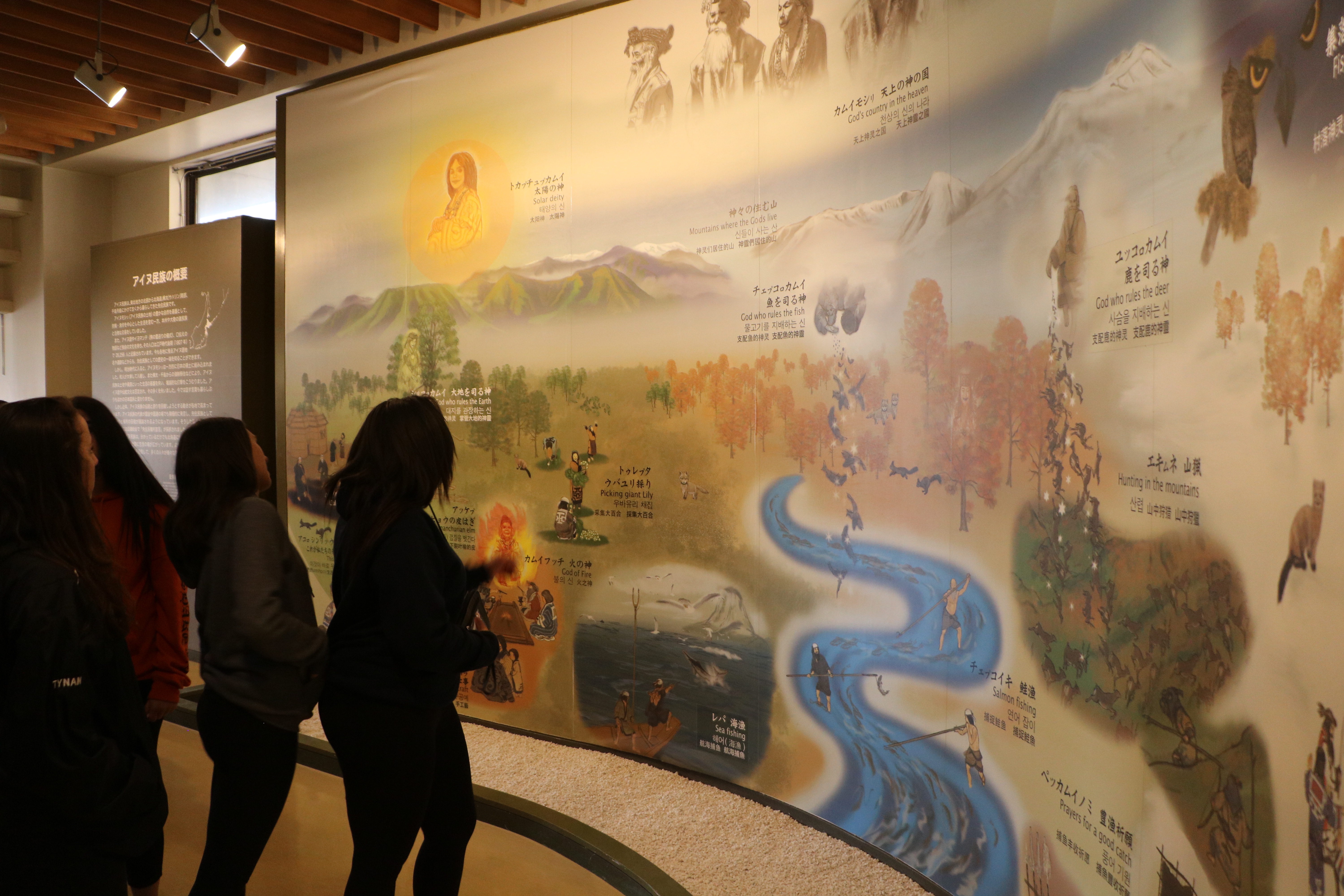
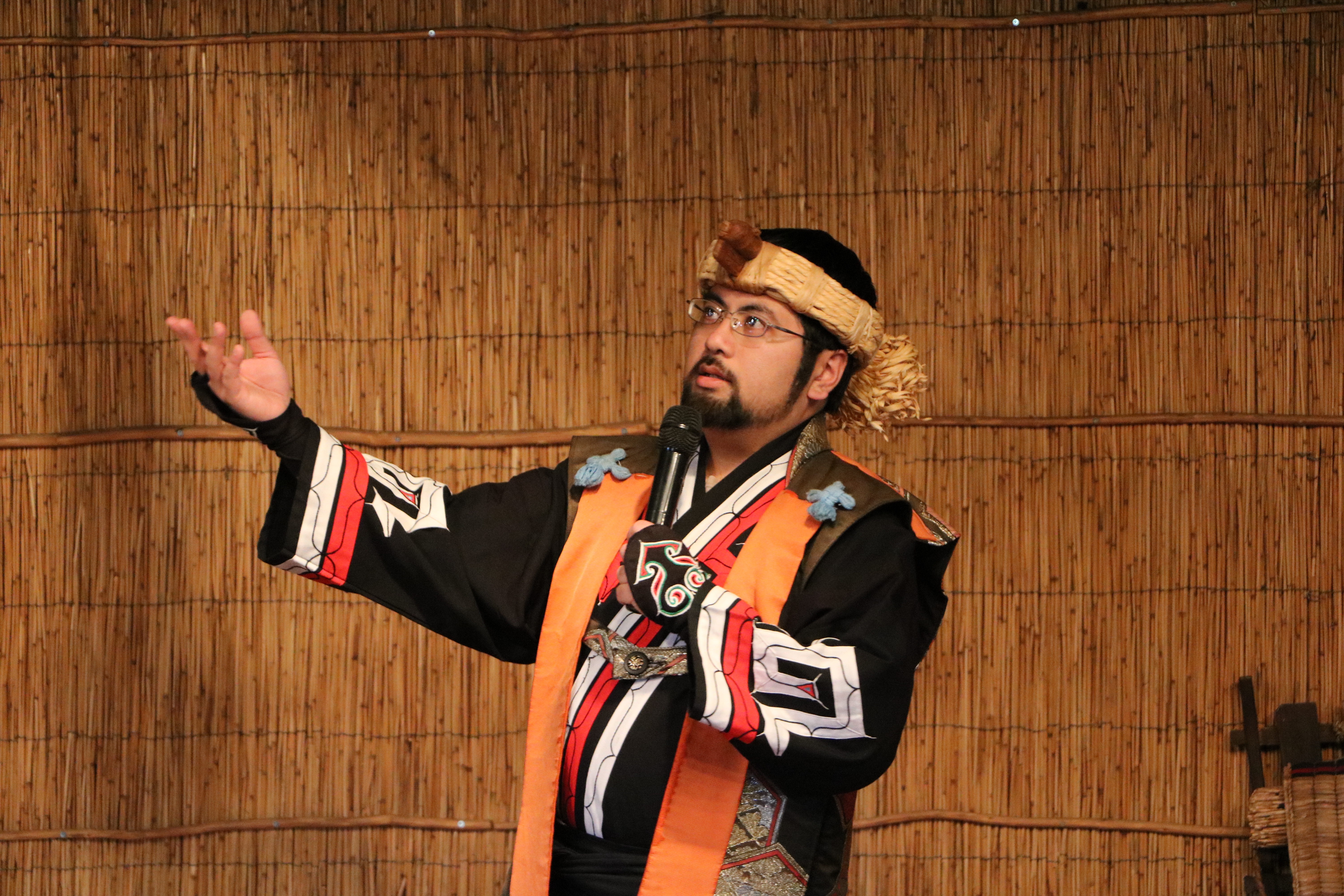
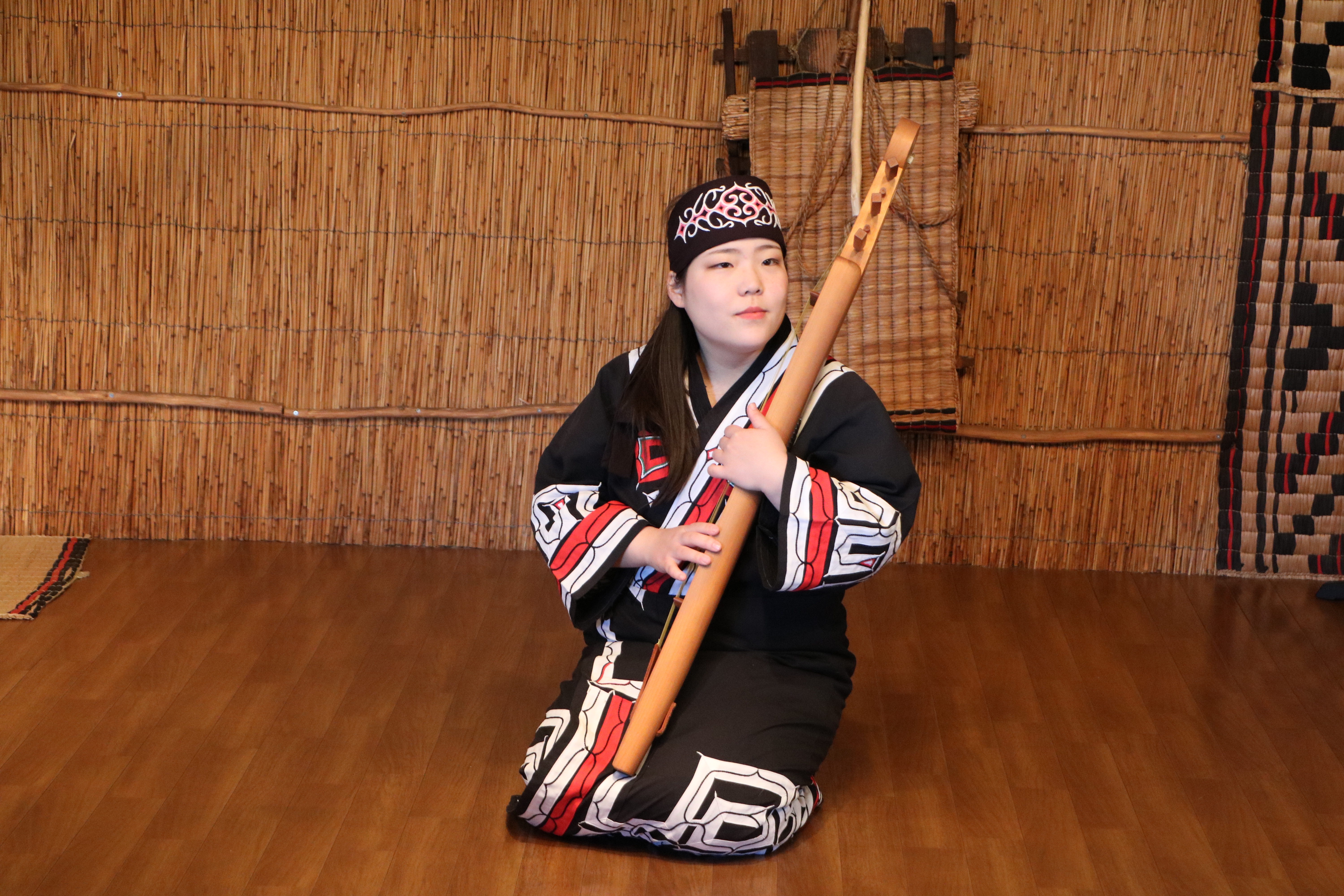

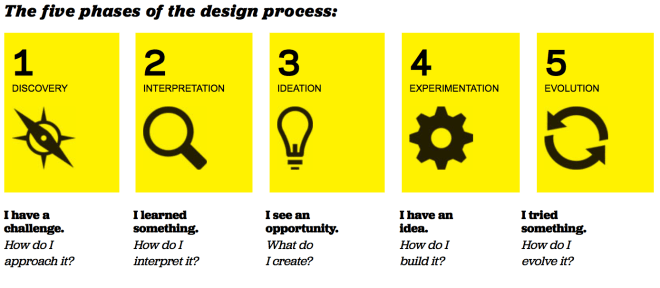
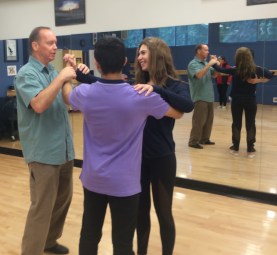
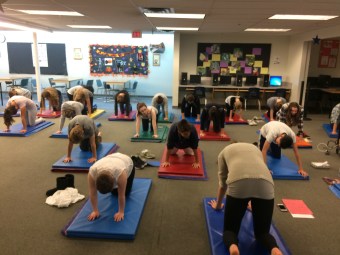
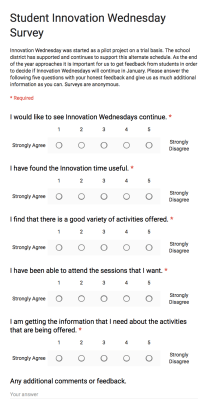
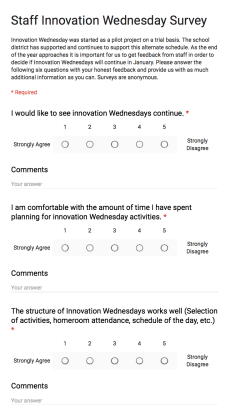

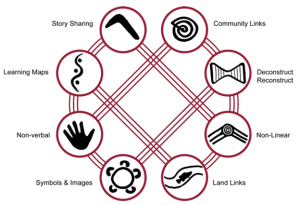
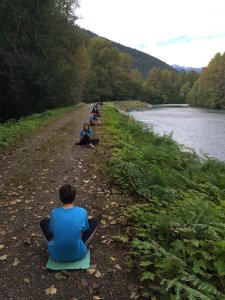
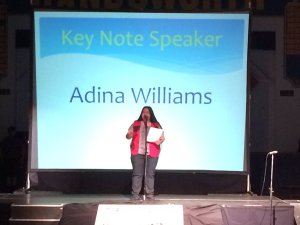

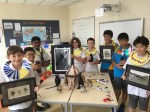



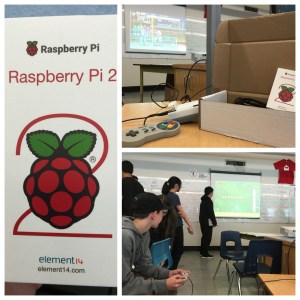 A friend of mine had taken a Raspberry Pi and turned it into a Super Nintendo simulator. I brought that into the class and plugged it in for the kids to see. It’s one thing to tell them what they can do, but being able to show them a finished product was even cooler. This inspired some students to research how to make one themselves. Because some projects that were larger may have needed students to buy other peripheral hardware like controllers, I provided an added incentive saying that if anyone came up with a substantial project that required some personal investment on their part, that they could take the Raspberry Pi home permanently when they were done their project.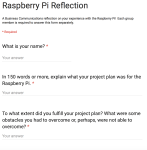


 Education Rumination
You must be logged in to post a comment.