With yet another basketball season upon us, I thought this might be a good opportunity to take stock of, and reflect upon why it is I coach.
I can still remember playing sports in high school and wondering to myself why on earth anyone would volunteer so much time to a team when their own kids didn’t play on it, and they themselves didn’t even get to play either! I mean, they just stood on the sidelines and did the substitutions and drew up a few plays… it didn’t seem like much fun to me.
Volunteering to coach basketball is a huge commitment. It’s 6 or 7 days a week for 4.5 months of the year. There’s overnight / away tournaments, which means you’re averaging upwards of 20 hours a week in time spent volunteering. ‘Cowichan’ has become a 4-letter word in my house as it means I’ll be away overnight yet again with the basketball team. I’m not popular on those weekends with my family, but it’s a chance to take the team away for some important bonding and quality time. So why do I continue to do it?
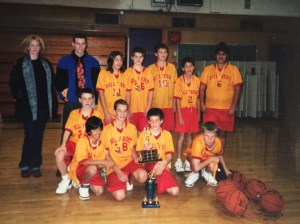
For a bit of context let me take you back to my first real basketball coaching experience. I was in second year at the University of Victoria in 2001, and as part of my teacher preparation program we had to go volunteer to coach a team for a season. There was a local team of grade 7s at Hillcrest Elementary in Victoria that needed a coach for their season and so I dutifully went over to the school and met with the principal. I remember how ecstatic she was that I was there. It was wonderful to be so warmly welcomed by an administrator. She told me that if I hadn’t come to coach that these boys likely would not have had a team. And what a team they were. Grade 7 is not a lot different than older grades when it comes to a recipe for success. They say you can’t coach height, which turned out to be a good thing for me because my team had 2 boys who were pushing 6 feet tall. I surprised myself with how much I genuinely enjoyed leading the boys through practices, drawing up plays for them to run, modeling good sportsmanship, and making every attempt to have all the boys playing time be as equitable as possible. Having a winning season made my first coaching experience enjoyable, but it was all those little things I had previously thought would be boring when I was a player watching my coaches that I found I really relished.
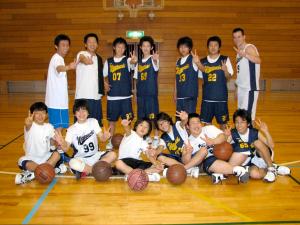
And so I was hooked. For the past 15 years since I’ve been coaching. Even when I lived overseas I made sure I continued to coach. My team of grade 6 boys at Wanouchi Junior High in Japan were easily the least talented group of boys I have ever worked with. We spent an entire season working on the right-hand lay-up (their good hand!). I got to work on my Japanese by repeatedly yelling such phrases as “ASHI CHIGAU!” (wrong foot!) We lost every game that season. But we had so much fun. I can still remember Toshiki, the kid who looked like a sumo-wrestler and was my #5 ‘big man’ and the way he and I would high-five if he even caught some of the rim on one of his shots. I’m not sure he scored a basket that year. It was most evident to me during these times that extra-curricular involvement was where you had the opportunity to cultivate real bonds with students; bonds that tied them to you, and by extension tied them closer to their school community.
Over the years I’ve come to have a new appreciation for the time and effort my coaches put in for me as I went through my K-12 experience. People like Bob Baldwin, Vinny Alvano, Scott Bennett, Peter Therrien and Garth Thomson just to name a few. Without the hours and hours those men put into volunteering with me I wouldn’t be doing what I’m doing today, or be the person I am today. I often think about what their time with me has meant. I know many of the qualities I’ve developed as an adult are due, at least in part, to the guidance they helped provide throughout my own formative years.
Coaching means responsibility. It means leadership. It means having to bite your lip when you’re upset at an official’s call because you know you have a bench of 15 impressionable minds sitting next to you. It means knowing when to encourage and when to discipline. How to provide expectations and help athletes set goals. It’s about dealing with fragile egos, disappointments, and acting with humility when you win.
Coaching is not always easy. Cutting players is the worst – I wish everyone could make the team. I’ve been cut from teams and I’ve been one of the last players on the bench. It’s not fun when your name is not on the list or when you never get off the bench – I know that. Coaches have to make difficult decisions, but I try to focus on the fact that in volunteering I know I’ve been able to provide the opportunity for more students to participate than if I hadn’t volunteered at all.
I coach because I enjoy having the group rely on me for guidance and leadership. I coach to pay it forward and thank those coaches who took the time to guide me. I coach because I know the importance of providing opportunity for students to participate in extra-curricular activities. I coach because I enjoy the technical aspects of the game and being able to continually learn more. I coach, selfishly, because it gives me a better connection with my students, and most of all because I’ve found I genuinely enjoy it.
And with that, I’m excited to start another season!
 Education Rumination
You must be logged in to post a comment.